
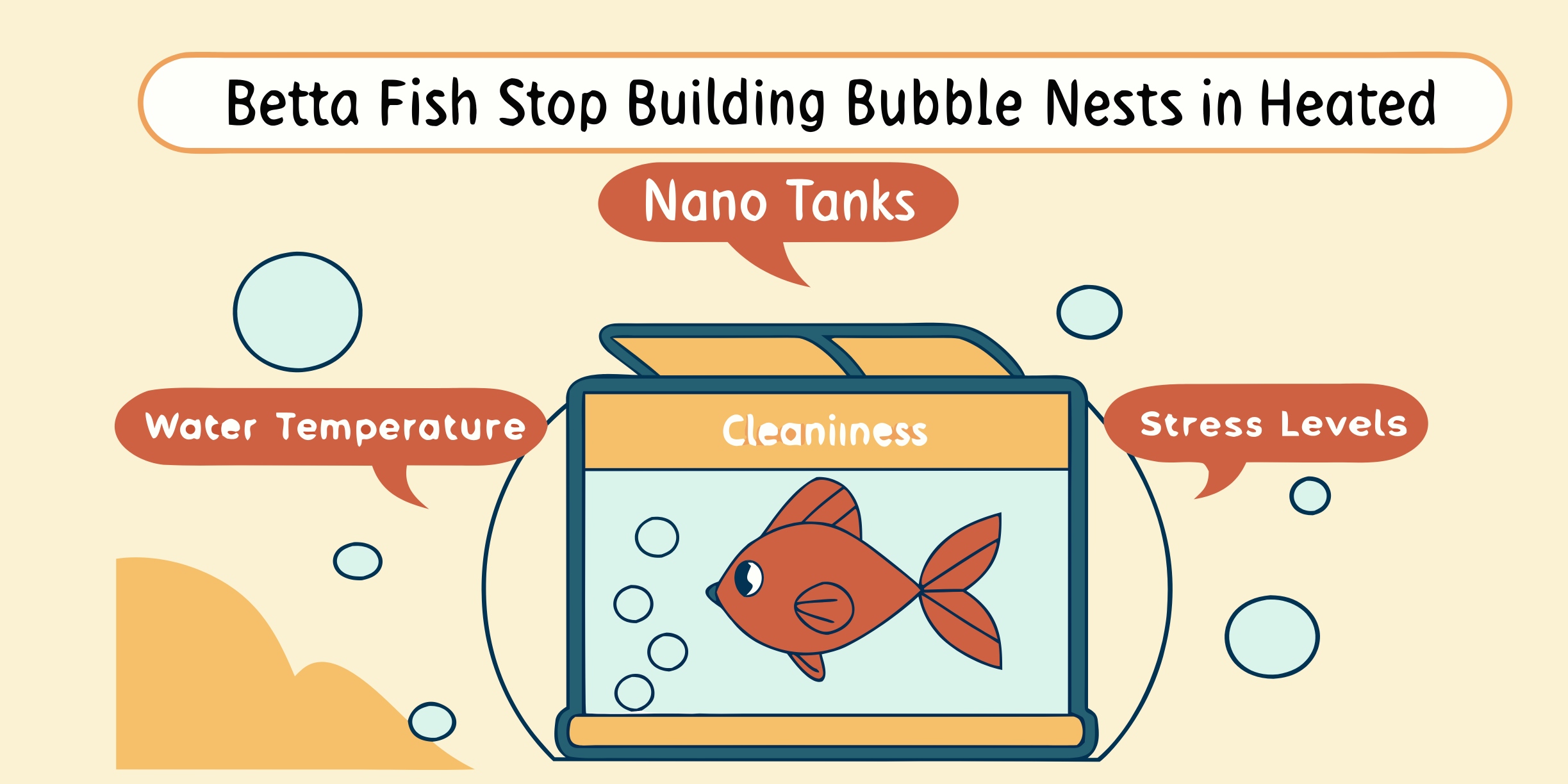
Bubble nest building is one of the most fascinating behaviors of male betta fish. For many betta keepers in the USA, especially those maintaining heated nano tanks, the sudden disappearance of bubble nests can be worrying. Owners often assume that the heater is malfunctioning or that something is seriously wrong with the fish.
The truth is more nuanced. While heaters are essential for betta health, heated nano tanks can unintentionally disrupt the environmental and behavioral triggers required for bubble nest formation. Temperature stability, surface conditions, stress factors, and water chemistry all play critical roles.
This article explains why betta fish stop building bubble nests in heated nano tanks, what it means for their health, and how to restore ideal conditions without harming your fish.
What Are Bubble Nests and Why Do Bettas Build Them?
Bubble nests are clusters of air bubbles coated with saliva that male bettas build at the water surface.
Purpose of bubble nests:
- Reproductive preparation
- Protection for fertilized eggs
- Indicator of environmental comfort
While bubble nests are commonly associated with breeding readiness, they also reflect confidence and territorial stability rather than pure health.
Important:
A healthy betta may still choose not to build a bubble nest.
Why Heated Nano Tanks Change Betta Behavior
Nano tanks (2–10 gallons) behave very differently from larger aquariums.
Key differences:
- Faster temperature fluctuations
- Rapid evaporation
- Limited surface area
- Reduced gas exchange
- Higher sensitivity to stress
When a heater is introduced into a nano tank, these effects become amplified.
Main Reasons Bettas Stop Building Bubble Nests in Heated Nano Tanks
1. Temperature Is Too High (or Too Stable)
While bettas are tropical fish, overheating is a common mistake.
Optimal temperature range:
- 76–80°F (24–27°C)
Problems caused by excessive heat (above 82°F):
- Increased metabolism → fatigue
- Reduced oxygen availability
- Decreased surface activity
- Focus on survival, not reproduction
In overheated nano tanks, bettas often rest more and build fewer nests.
2. Heater Creates Surface Disturbance
Bubble nests require still water surfaces.
In nano tanks:
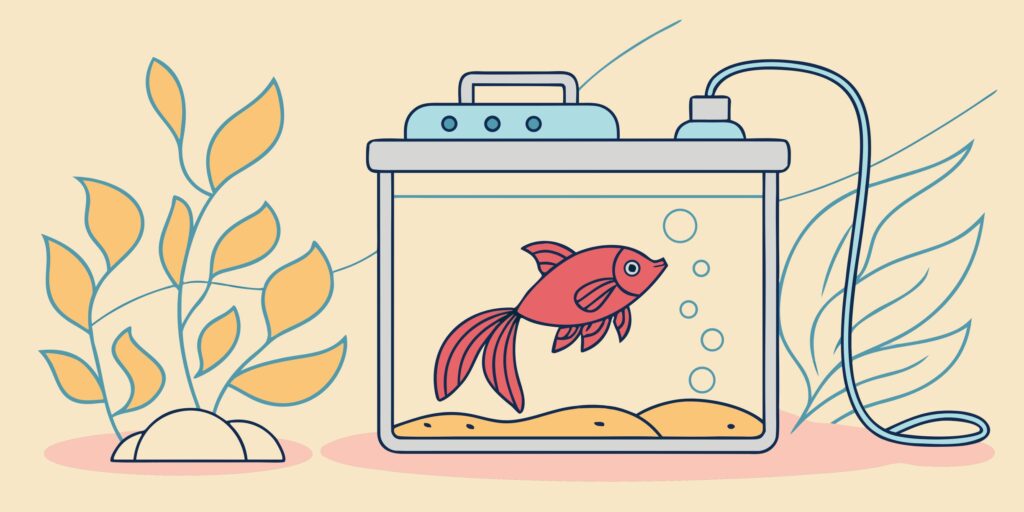
- Heater convection currents rise vertically
- Warm water disrupts surface tension
- Micro-ripples destroy forming bubbles
Even gentle water movement near the heater can prevent nest formation.
3. Low Dissolved Oxygen at Higher Temperatures
Warm water holds less oxygen.
In heated nano tanks:
- Oxygen depletion happens faster
- Bettas rely more on labyrinth breathing
- Energy is diverted from nest-building
Low oxygen doesn’t kill the betta—but it reduces non-essential behaviors like bubble nesting.
4. Stress from Limited Territory
Betta fish are territorial by nature.
Nano tanks often:
- Limit exploration
- Reduce perceived territory
- Increase boredom or stress
Heated tanks accelerate metabolism, meaning the fish needs more stimulation and space, not less.
Stress suppresses reproductive instincts.
5. Frequent Temperature Fluctuations
Cheap or oversized heaters can cause:
- Rapid heating cycles
- Temperature overshooting
- Nighttime drops
Even fluctuations of 2–3°F in a nano tank can:
- Disrupt hormonal balance
- Reduce nest-building motivation
6. Changes in Water Chemistry Due to Heat
Heat speeds up chemical reactions.
Effects include:
- Faster ammonia conversion
- Increased bacterial activity
- Rapid pH swings after water changes
These subtle shifts may be undetectable on test kits but noticeable to bettas.
7. Strong Filtration Paired with Heating
Many nano tanks use:
- Internal filters
- Hang-on-back filters
When combined with heating:
- Surface agitation increases
- Bubble nests collapse
- Bettas avoid the surface
Even sponge filters can interfere if airflow is too strong.
8. Age and Maturity of the Betta
Bubble nest frequency decreases with age.
- Young males: frequent nest builders
- Mature adults: occasional builders
- Older bettas: rare or none
Heating accelerates metabolism, which may age behavioral patterns faster, especially in nano environments.
Does No Bubble Nest Mean an Unhealthy Betta?
No.
This is one of the biggest myths in the aquarium hobby.
A healthy betta may:
- Eat well
- Display bright colors
- Be active
- Interact normally
- Never build bubble nests
Bubble nests are optional behavior, not a health requirement.
How to Encourage Bubble Nest Building (Safely)
1. Adjust Heater Settings Carefully
- Maintain 78–79°F consistently
- Avoid heaters rated too high for nano tanks
- Use a thermometer to verify accuracy
2. Reduce Surface Movement
- Lower filter output
- Add floating plants (frogbit, salvinia)
- Redirect filter flow away from surface
Floating plants provide ideal nest anchors.
3. Improve Oxygen Availability
- Use gentle aeration if needed
- Avoid overstocking
- Perform small, regular water changes
4. Provide Environmental Enrichment
- Add leaf hammocks
- Introduce safe decor
- Rearrange layout occasionally
Mental stimulation reduces stress.
5. Maintain Stable Water Chemistry
- Weekly 20–25% water changes
- Dechlorinate properly
- Avoid temperature shock
Consistency is more important than perfection.
Common Mistakes Betta Owners Make
- Turning heaters too high “to boost activity”
- Assuming bubble nests = happiness
- Using strong filters in nano tanks
- Constantly adjusting temperature
- Over-cleaning the tank
These actions often reduce nest-building instead of encouraging it.
FAQs
Q1: Can female bettas build bubble nests?
Rarely. Bubble nest building is almost exclusively a male behavior.
Q2: Should I turn off the heater to encourage bubble nests?
No. Bettas require stable warm temperatures. Removing heat can cause stress and illness.
Q3: Do bubble nests mean my betta wants to breed?
Not always. It simply means the environment feels secure enough to trigger instinct.
Q4: How often should a betta build bubble nests?
There is no standard frequency. Some build weekly, others monthly, and some never.
Q5: Will adding a mirror help?
Temporarily, yes. Mirrors may stimulate nest building but should be used sparingly to avoid stress.
Conclusion
When betta fish stop building bubble nests in heated nano tanks, it is rarely a sign of illness. More often, it reflects environmental subtleties caused by heat, space limitations, surface disturbance, and metabolic stress.
Heaters are essential, but in nano tanks they must be carefully balanced with stable temperatures, gentle water flow, and proper oxygen levels. Bubble nests should be seen as a bonus behavior, not a diagnostic tool.
A healthy, active betta that eats well and displays natural behavior is thriving — even without a single bubble at the surface.
References
- Axelrod, H. R., & Vorderwinkler, W. (2018). Encyclopedia of Tropical Fishes.
- Goldstein, R. J. (2015). The Betta Handbook. Barron’s.
- Walstad, D. (2013). Ecology of the Planted Aquarium.
- International Betta Congress (IBC) — Betta Behavior Studies.
- Aquarium Co-Op Research — Betta Care & Nano Tank Behavior.
- University of Florida IFAS — Tropical Fish Physiology Publications.